


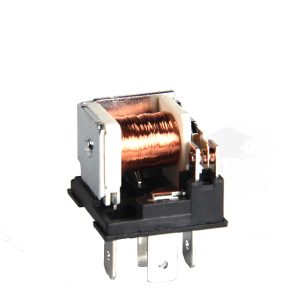
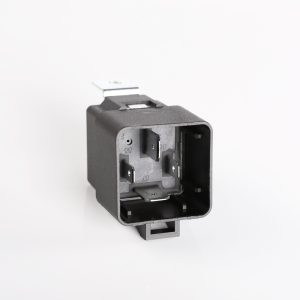
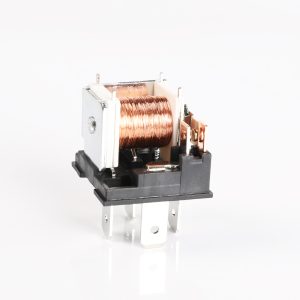
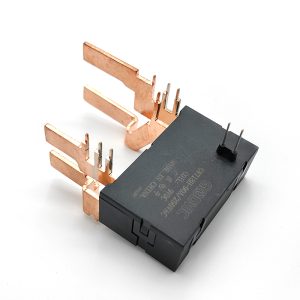
Automotive relay is an electrical control component that plays a very important role in the automotive circuit system. Its main functions are as follows:
1. Control large current circuits
There are many high-power electrical appliances on the car, such as headlights, wiper motors, electric fans, etc., which require large currents to pass through. Relays can use small currents to control large current switches, thereby controlling the on and off of these high-power electrical appliances.
2. Circuit isolation protection
The relay’s coil circuit and load circuit are physically isolated, which can prevent large currents from causing interference to the control circuit and improve the system’s anti-interference capability.
3. Circuit switching
The contacts of the relay can switch different circuits to realize selective control of multiple circuits, such as switching control of dual high beams.
4. Time delay control
Some relays have delay characteristics, which can realize delayed start or delayed stop, such as delayed headlight extinguishing function.
5. Logic control
Multiple relays can form a logic control circuit to realize complex control functions, such as central door locking systems.
6. Fault protection
Relays can be used to protect circuits from overload and short circuit, and can cut off the circuit in the event of a fault.
Common relays on cars include: main relay, fan relay, horn relay, high beam relay, etc. With the continuous development of automobile electronic and electrical systems, relays are increasingly used in automobiles.
Reviews
There are no reviews yet.